In the studio with Mara Okafor
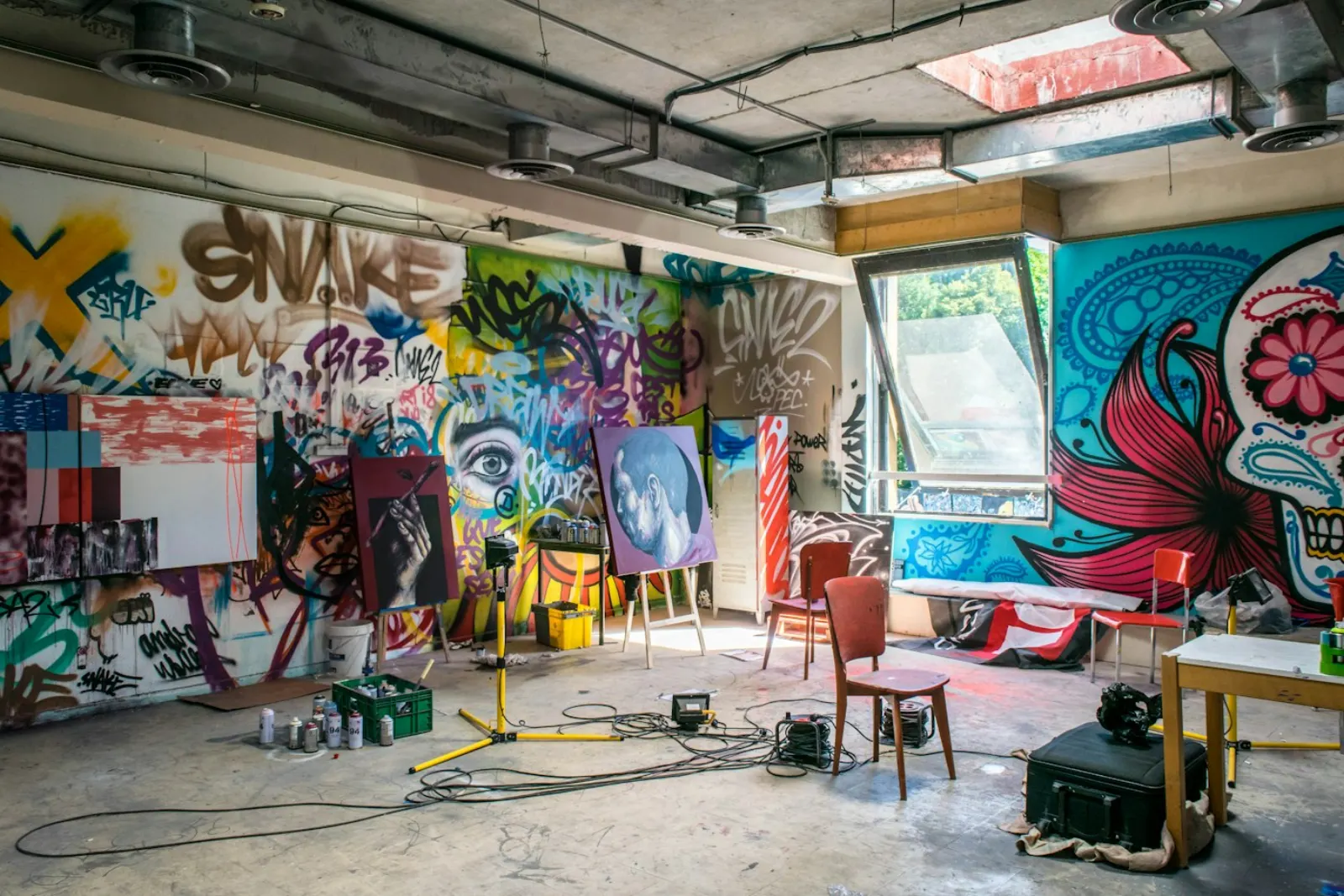
The first thing you notice in Mara Okafor’s studio is the jars. Dozens of them, lined along a plank shelf, each labelled with a date and a time: 14.03, 06:10, high.
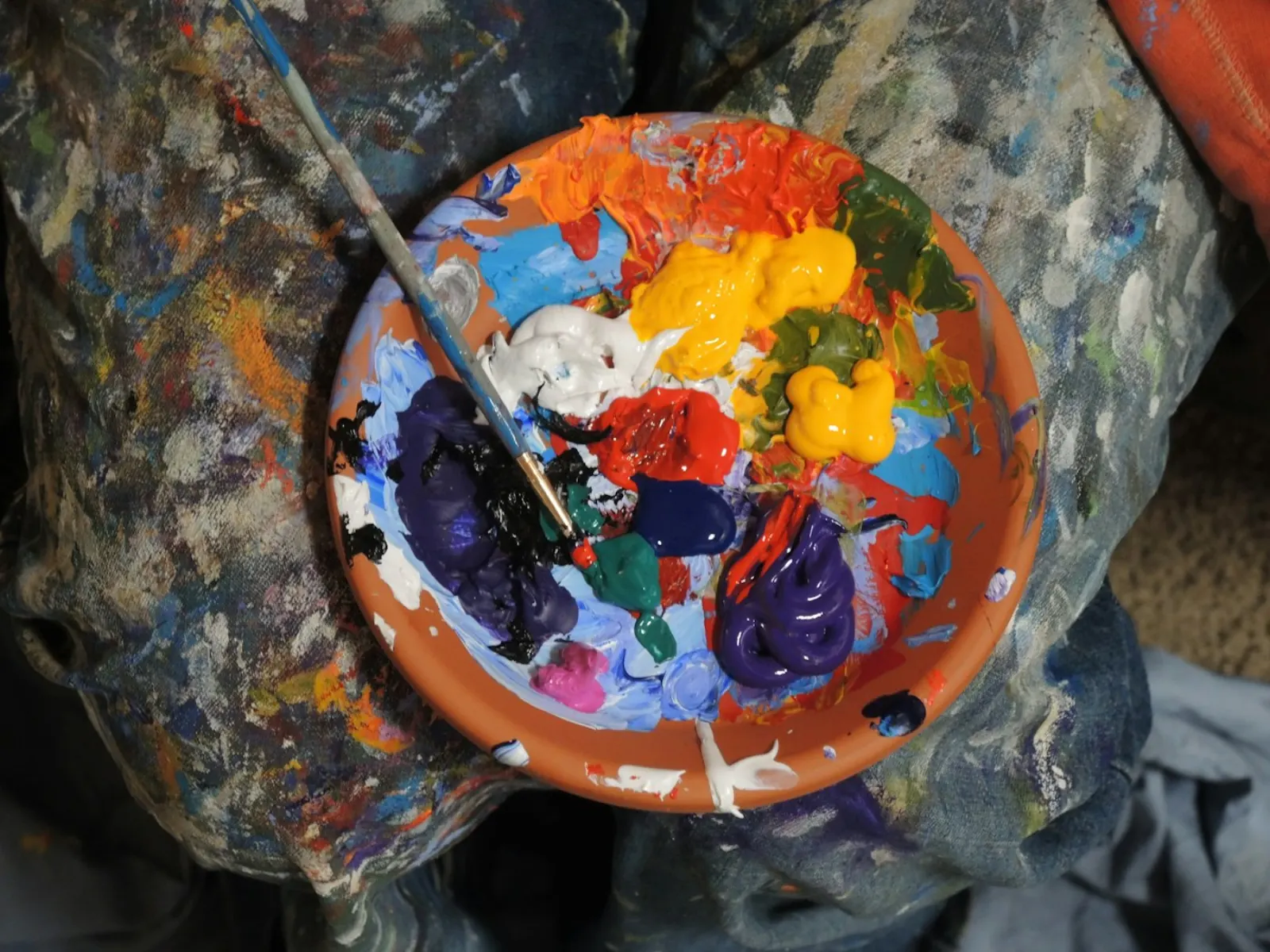
“Every jar is a tide,” she says, pouring one into a tin of ultramarine. “When I thin the paint with it, the salt does something I can’t. It crystallises at the edges as it dries. You get these rings, like the line the sea leaves on a wall.”
The studio is a borrowed boatshed in Afurada, a fishing village on the south bank of the Douro. The doors open straight onto the water. In winter she paints in a coat; in summer, she paints at dawn before the light flattens everything.
Painting on the floor
Okafor works flat, with the canvas on the concrete. She pours, tilts and waits — sometimes for days — before deciding whether to work back into a surface. “Most of the painting is waiting,” she laughs. “I’m not very good at it.”
The fourteen paintings in Tidal Memory were made over eighteen months. Some were finished in an afternoon; Estuary Song, the largest at 2.4 metres, took most of a year.
“I wanted paintings that hold a moment the way water holds a temperature. Not a picture of the river — a record of it.”
Bringing the river to London
Hanging the show raised its own questions. The paintings are heavy with pigment and salt and needed new stretchers before shipping. In Gallery 2 we built a vitrine for the jars and notebooks so visitors can see the method as well as the result.
Tidal Memory is on view until 22 November 2026. Free curator tours run every Saturday at 13:00.
More from the Journal
How we hang a show in four days
Spirit levels, string lines and the 145 cm rule — the craft of installing paintings.
Collecting your first painting
Budgets, editions, condition reports and why you should always ask to see the back.

Why we never mix on the palette
Revisiting the rule behind our very first exhibition, Carnival, three years on.